

Theme:Theoretical Insights into Reactive Electrochemical Interfaces at the Mesoscale: A Preliminary Perspective
Speaker: Prof. Jun Huang
Time: 10:00-11:30, Tuesday, November 11, 2025
Host: Prof. Wenxing Yang, Pls of CAP for Solar Fuels and School of Science, Westlake University
Venue:E10-405, Yungu campus
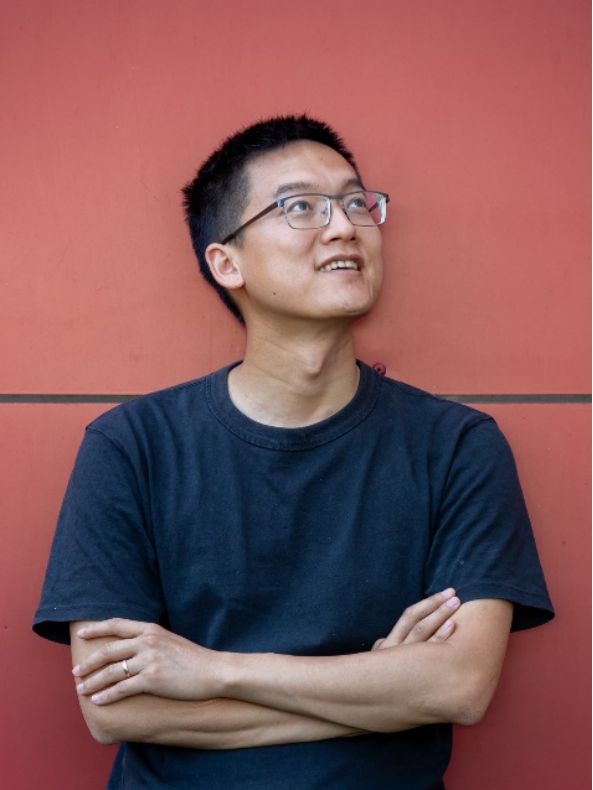
Prof. Jun Huang
Forschungszentrum Jülich / RWTH Aachen University
Speaker:
Huang Jun, born in Xinhua, Hunan Province, is a researcher at the Forschungszentrum Jülich in Germany and a junior professor at RWTH Aachen University. His work focuses on theoretical electrochemistry research and teaching. He received his bachelor's degree and doctoral degree from Tsinghua University in 2012 and 2017, respectively, under the guidance of Professor Jianbo Zhang. From 2017 to 2020, he served as an associate professor at the School of Chemistry and Chemical Engineering, Central South University. From 2020 to 2022, he performed his research at the Institute of Theoretical Chemistry, Ulm University in Germany and the Institute of Electrochemistry, University of Alicante in Spain as a Humboldt Research Fellow. In 2022, he received the Helmholtz Young Investigators Award. In 2024, he was awarded the European Research Council Starting Grant. In 2025, he was honored with the Hellmuth Fischer Medal, a triennial award in the field of electrochemistry and corrosion. He is the thirteenth recipient since the medal was first awarded in 1989 and the first scholar to receive it for theoretical work.
Abstract:
The gap between the macroscopic and microscopic scales in electrochemical systems is so vast that there has yet to be a unified definition for the mesoscopic scale. In this lecture, “mesoscopic” refers to the range of 10–100 nm. The particular significance of this scale in electrochemical research lies in the prospect that (near) in-situ experiments and (near) first-principles theoretical modeling may, in the not-too-distant future, engage in meaningful dialogue within a regime comfortable for both approaches. Beginning in mid-2014 during my doctoral studies, I entered electrochemical research through a specific problem at this scale that held engineering significance. In this lecture, I will share the attempts and insights gained over the past decade in the theory and modeling of mesoscopically reactive electrochemical interfaces. This will cover two main aspects: from an Electrochemical Engineering Perspective: we have developed a multi-level electrochemical reaction model (2017–) that integrates electronic structure, electric double layer effects, and macroscopic transport phenomena. From an Applied Theoretical Physics Perspective: we are developing a density-potential functional theory (DPFT) method based on first principles (2020–) to describe the multi-scale interactions among electrons, ions, and solvent molecules at solid-liquid interfaces under experimental conditions. Unlike DFT, which treats the electrostatic potential as a conjugate variable of the electron density, DPFT attempts to place particle densities and (various equivalent) potentials on an equal footing, thereby introducing new theoretical degrees of freedom.
Contact:
Linli Xiang, Email: xianglinli@westlake.edu.cn