

On November 23, 2024, the team led by Professor Licheng Sun from the School of Science and the Center of Artificial Photosynthesis for Solar Fuels at Westlake University was awarded the 2024 Pineapple Science Award for their research achievement titled "Frozen Watermelon Solves a Big Problem."
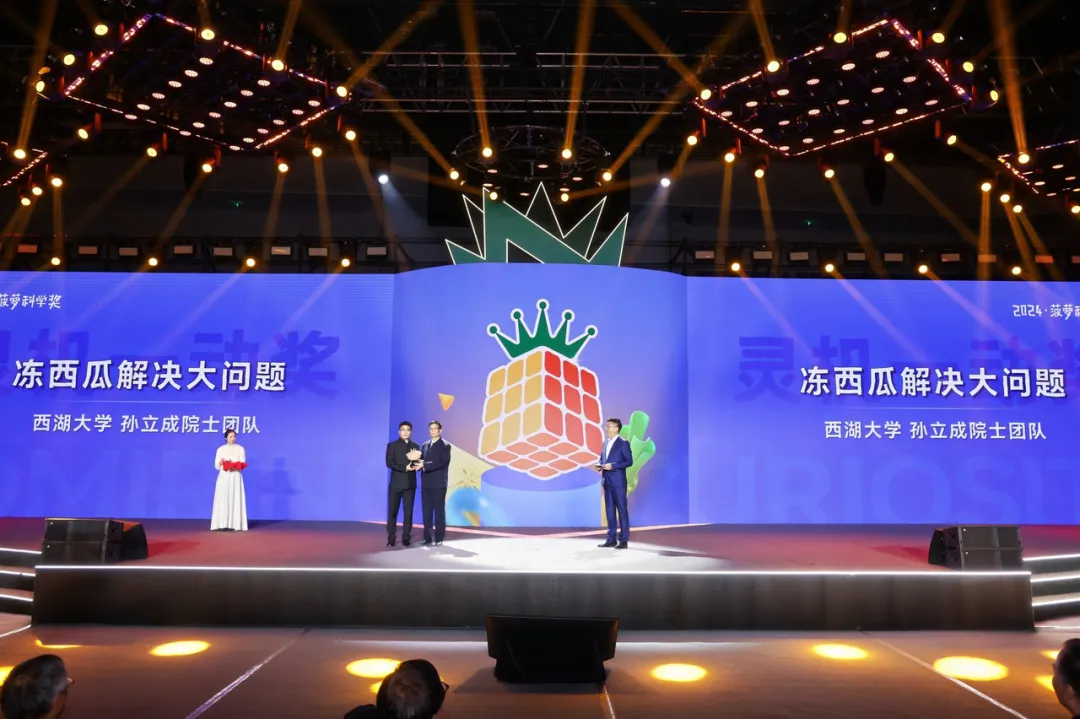
The research team led by Academician Licheng Sun conducted an in-depth study on the membrane of frozen watermelon rind. Team members Dr. Qinglu Liu and Dr. Tang Tang placed the watermelon rind membrane into an electrochemical carbon dioxide reduction reaction testing device and discovered its excellent performance. Through interdisciplinary research, they further revealed the mechanism of ion-selective permeation in the watermelon rind membrane during electrochemical CO₂ reduction and proposed a strategy for constructing a new type of ion transport membrane (ITMs). This achievement was published in Nature Communications in August of this year.
The scientific inspiration for this research originated from an unexpected incident. In 2021, Qinglu Liu and Tang Tang placed a watermelon in a freezer. After a few days, they found that the watermelon rind membrane naturally peeled off after thawing. Out of curiosity, Tang Tang hypothesized that the watermelon rind membrane might be a natural ion exchange membrane and initiated subsequent research. The Pineapple Science Award stated that, in recognition of the Licheng Sun team's scientific spirit of "daring to explore and excelling in exploration," the research team was awarded the 2024 Pineapple Science Award·Spark of Innovation Award.
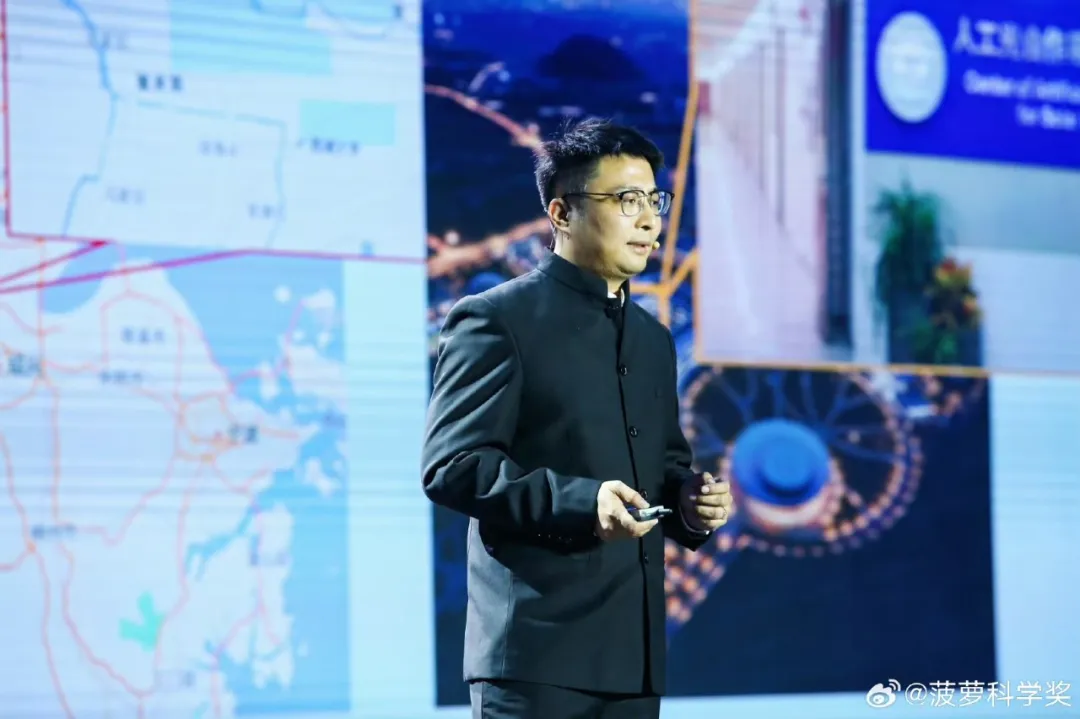
Dr. TANG Tang represented the team to receive the award and introduced the research
The aforementioned discovery by Academician Licheng Sun's team provides novel approaches and methods for addressing existing issues in ion transport membranes. Based on the transport mechanism of the watermelon rind membrane, Licheng Sun's team is currently designing new types of ion transport membranes and has prepared anion exchange membranes for water electrolysis and electrochemical CO₂ reduction reactions, respectively, which exhibit excellent performance. These follow-up research and development efforts are currently underway.