

The plane touched down at Hangzhou Xiaoshan International Airport. As SUN Licheng turned on his phone, he was startled to discover that the green health code he had obtained when departing from Stockholm had already turned red.
Hangzhou’s first greeting to him was a 14-day quarantine for observation. What surprised him even more was that two days later, the World Health Organization declared the COVID-19 outbreak a global pandemic.
SUN Licheng is a fellow of the Royal Swedish Academy of Engineering Sciences, a foreign member of the Chinese Academy of Sciences, a Swedish Distinguished Professor (VR Rådsprofessor), a chair professor at the Royal Institute of Technology in Sweden, an internationally renowned chemist, an expert in the field of artificial photosynthesis, and a "Highly Cited Researcher" globally.
Amid the pandemic, SUN returned to China and joined the School of Science at Westlake University, becoming its first chair professor to commence his role in 2020.
Artificial Photosynthesis
SUN Licheng's field of research bears a name that is both familiar and unfamiliar—artificial photosynthesis.
In nature, photosynthesis is nearly omnipresent. For example, green plants utilize sunlight to drive the conversion of carbon dioxide (CO2) and water (H2O) from the air into organic materials such as carbohydrates, while releasing oxygen. This fundamental chemical reaction process has been key to maintaining Earth's renewable cycle for billions of years.
As the name suggests, artificial photosynthesis involves humans mimicking this miraculous renewable energy cycle system of nature: how to use solar energy to convert Earth's most abundant water resources and the greenhouse gas carbon dioxide into storable chemical energy, such as hydrogen or methanol.
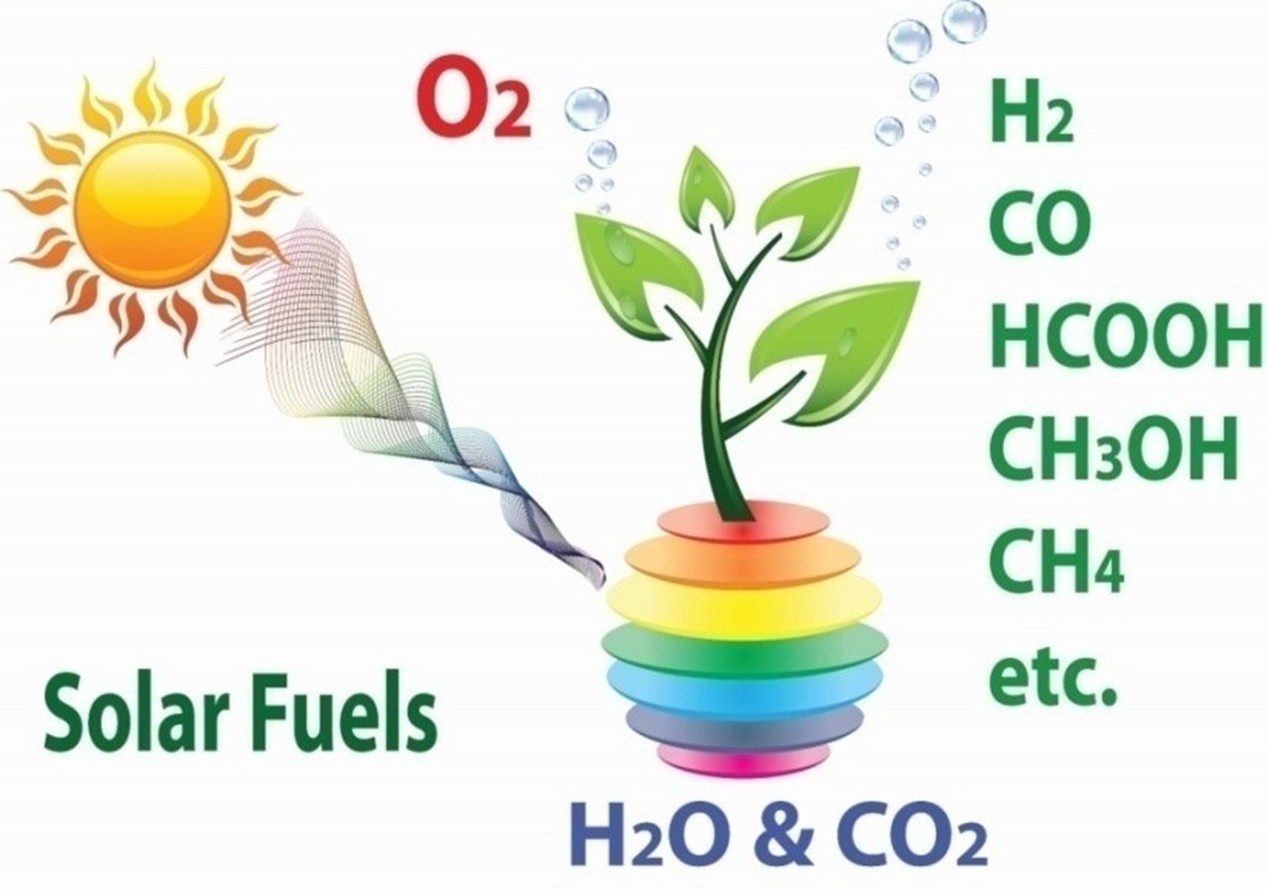
Artificial Photosynthesis
However, the energy barrier for water splitting is very high. The usual sunlight shining over rivers, lakes, and seas alone cannot produce hydrogen and oxygen. It is as if a massive mountain stands between water and hydrogen or oxygen. Without catalysts, achieving the chemical reaction for artificial photosynthesis requires overcoming this high energy barrier—essentially, climbing over this mountain.
“With catalysts, the situation changes entirely. It’s like digging a tunnel through the mountain,” said SUN Licheng. The key scientific challenge and technical difficulty in realizing this “equation” of turning water into hydrogen lies in the catalysts. How to develop efficient, low-cost water oxidation catalysts has become the technical bottleneck in achieving artificial photosynthesis.
SUN Licheng is precisely an internationally renowned scholar in this cutting-edge field. He has long been engaged in foundational research on the frontier science and applications of solar fuels and solar cells. He has achieved internationally acclaimed research results in the design and synthesis of efficient water oxidation molecular catalysts, the mechanism of oxygen-oxygen bond formation, and the design and preparation of functional devices for photocatalytic water splitting to produce hydrogen.
Currently, the world’s leading water oxidation molecular catalysts, such as the one known in the industry as the Ru-bda catalyst, originated from his research team. Its catalytic efficiency for water oxidation rivals that of natural photosynthesis and is considered a major breakthrough in the field of artificial photosynthesis.
“After joining Westlake University, my research focus remains on catalysis and renewable energy conversion,” said SUN Licheng. He aims to develop a low-cost catalyst that can be used on a large scale. “Fundamental research is a long-term endeavor, but it is also a race against time. The whole world is competing. Only when someone breaks through the technical bottleneck of efficient, affordable, and stable water oxidation catalysts can renewable energy, environmental and climate issues, and the sustainable development of the chemical industry be fundamentally resolved.”
The Unpopular Path
As SUN Licheng noted, artificial photosynthesis has now become a highly sought-after field.
The development and utilization of solar energy have become areas of strong support worldwide, with not only substantial research funding but also strategic national importance. Particularly in the face of global challenges such as energy shortages, climate warming, and ecological imbalances, foundational innovations that support sustainable development naturally become the “hotspot.”
However, when SUN Licheng ventured into the field of artificial photosynthesis in the late 1980s, many were still unfamiliar with the concept.
In 1990, SUN Licheng earned his Ph.D. from Dalian University of Technology and served as an assistant researcher at the former Institute of Photographic Chemistry of the Chinese Academy of Sciences. There, he was exposed to the clean conversion of solar energy and developed a strong interest in artificial photosynthesis research.
We often think that fundamental research is far from practical applications, yet the relationship between the two is exceptionally close. What is admirable about scientists is their foresight, which is directed toward the world ten or twenty years into the future.
At the time, SUN Licheng firmly believed in the immense potential of artificial photosynthesis and was willing to take on this unpopular path.
In 1992, while conducting postdoctoral research at the Max Planck Institute for Radiation Chemistry in Germany, he decided to switch to another laboratory at Freie Universität Berlin when he could not persuade his supervisor to change the research direction—despite being a Humboldt scholar.
A turning point came in the summer of 1994. SUN Licheng, then in his early thirties, submitted an academic poster on “artificial photosynthesis” to a major international conference on solar energy conversion and storage in Interlaken, Switzerland. His poster was selected for presentation. At the event, several professors from Sweden extended an invitation to him: “Your research is highly cutting-edge. We also see great potential in this direction and have secured millions in funding, but we are unsure how to proceed. Would you like to join us?”
SUN Licheng realized this was an excellent opportunity, even though, at the time, Sweden in his mind was simply a country covered in ice and snow.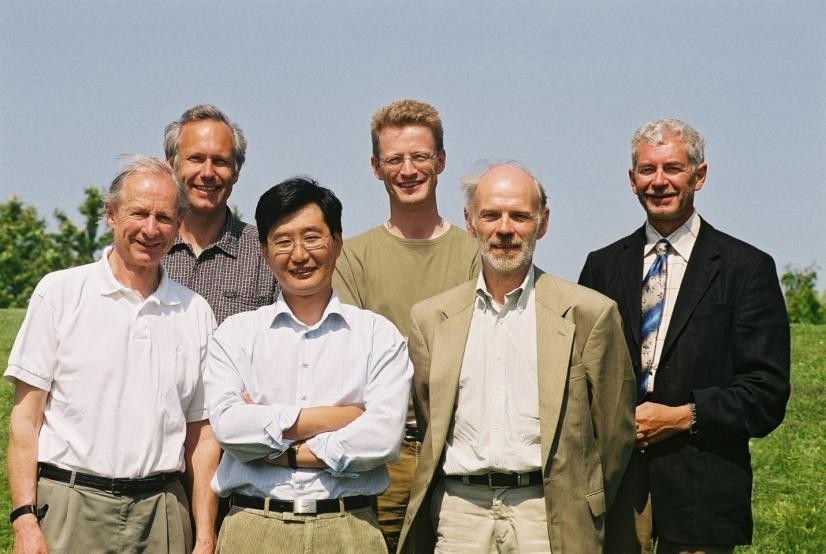
Founders of the Swedish Consortium for Artificial Photosynthesis (from left: Björn Åkermark, Peter Lindblad, SUN Licheng , Leif Hammarström, Villy Sundström, Stenbjörn Styring)
"Sweden was one of the first countries in the world to establish a research center for artificial photosynthesis. The United States, Japan, and other European countries only began to catch up several years later," he said. At the time, there were very few scientists worldwide engaged in this field of research, and major research funds or national-level teams dedicated to it were extremely rare.
In early 1995, SUN Licheng departed from springtime Berlin and arrived in snow-covered Stockholm. He joined the Royal Institute of Technology in Sweden, starting as an assistant professor. Nine years later, he was promoted to chair professor and, in 2017, was elected as a fellow of the Royal Swedish Academy of Engineering Sciences.

In October 2004, SUN Licheng became a chair professor at the Royal Institute of Technology in Sweden, with the inauguration ceremony held at Stockholm City Hall.
During this period, as the principal scientist, he organized and completed several major research projects in the fields of solar fuels and solar cells, achieving critical breakthroughs. He has published over 600 SCI-indexed papers in internationally renowned academic journals in chemistry and has been consistently recognized as a "Highly Cited Researcher" for many consecutive years.
"Without artificial photosynthesis, I might not be SUN Licheng," he said.
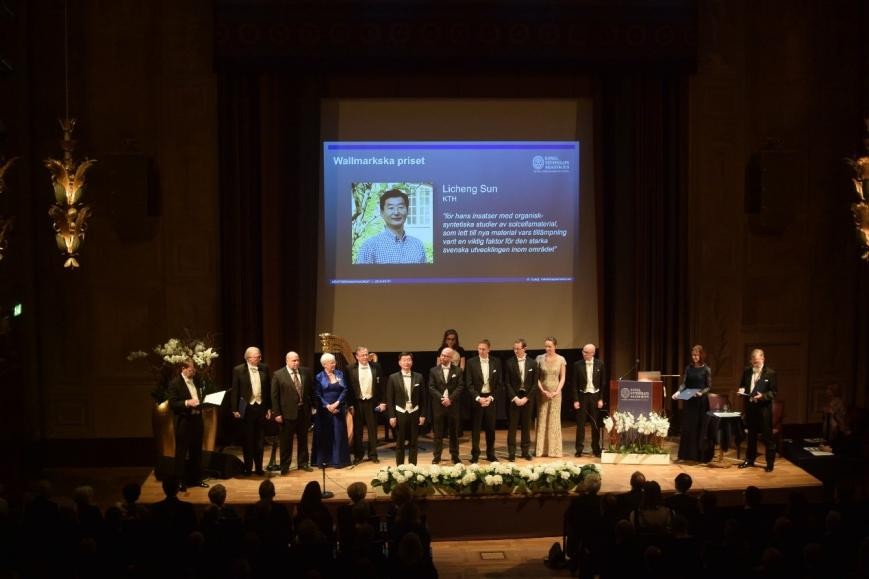
Professor SUN Licheng was awarded the Wallmark Prize 2016 by the Royal Swedish Academy of Sciences
Returning to China
The years 2017 and 2018 held special significance for SUN Licheng. In Sweden, he was appointed a Swedish Distinguished Professor (VR Rådsprofessor) by the Swedish Research Council, becoming the only scholar in the field of chemistry and chemical engineering to receive this honor to date. He was also elected as Academician No. 1775 of the Royal Swedish Academy of Engineering Sciences, the world's oldest academy of engineering, during its centennial year. In China, he was awarded the International Scientific and Technological Cooperation Award of the People's Republic of China.
The former recognized his three decades of foundational research, while the latter commended his two decades of relentless efforts in promoting scientific and technological cooperation and exchange between China and Sweden.
In 1999, Dalian University of Technology extended an invitation to SUN Licheng. At the time, based in Sweden, he had already achieved significant scientific results in the fields of artificial photosynthesis and solar fuels.
Dalian University of Technology is SUN Licheng's alma mater, where he completed his undergraduate, master's, and doctoral studies. He felt a compelling duty to answer the call from his alma mater and his homeland.
Consequently, through his efforts, the "Dalian University of Technology–Royal Institute of Technology Joint Research Center for Molecular Devices" was established. He devoted immense energy to this center, achieving a series of important scientific research outcomes. It also enabled the cultivation, training, and provision of a large number of outstanding scientific talents for the country, enhancing China's international influence in this field.
"Starting twenty years ago, the concepts of artificial photosynthesis and clean energy grew hotter year by year. Sweden started research in this area particularly early and holds a leading position globally. Of course, I wanted to propel China into this competition as soon as possible, to achieve original innovation and seize the high ground in future high-tech fields," SUN Licheng reflected. He considered himself fortunate to have identified this pivotal moment. "If I could use what I've learned to make even a small contribution to my country, that would be a very meaningful thing."
Success comes from long accumulation. Two decades of shuttling back and forth, two decades of experiences and observations, had imperceptibly shaped him.
In early 2020, SUN Licheng proposed to the Royal Institute of Technology and the Swedish Research Council his idea of joining Westlake University. This decision came as a surprise, merely two years after he was appointed a Swedish Distinguished Professor.
Wanting to develop his career in China? He could very well have considered a part-time role. The research project collaborations between the two countries, which he had orchestrated for years, were progressing smoothly.
Attracted by research conditions? His recent appointment as a Swedish Distinguished Professor placed him among only 27 individuals nationwide across all fields—including natural sciences, social sciences, medicine, humanities, and management. Each recipient receives continuous research funding of 5 million SEK per year for ten years, totaling 50 million SEK, with complete autonomy and no restrictions on its use.
Why give all this up?
His answer was: "Westlake University is the first university in China established with social forces. I strongly identify with its philosophy of being small, refined, and research-focused. I am also drawn to this exploration and challenge and hope to participate in this process."
Seeking the next new challenge and immersing himself in it—this is likely the instinct of a scientist like him.
Interdisciplinary Collaboration
On his first day after quarantine, SUN Licheng attended several meetings back-to-back, all on a similar theme: recruitment.
In fact, joining Westlake University, he shoulders two major responsibilities. First, of course, is establishing his own laboratory and research team. Second, entrusted by President SHI Yigong, he is to establish a university-level interdisciplinary center— "Center of Artificial Photosynthesis for Solar Fuels."
During his 14-day quarantine, he had "plotted" these two tasks countless times. "I came to Westlake University to get things done. I see the university is developing rapidly in all aspects, and I plan to advance both tasks simultaneously," SUN Licheng said, acknowledging this as a challenge for him.
Given the intense competition in this field nowadays, speed is of the essence.
He has thought it through: he himself focuses on artificial photosynthesis, using chemical methods to convert solar energy, water, carbon dioxide, and nitrogen into fuels. Dean of the School of Engineering Yang Yang, young PI Liu Dianyi, and others work on solar cell materials, using physical methods to convert solar energy into electricity. Young PI Wang Jianhui from the School of Engineering and others focus on electrical energy storage. Li Xiaobo from the School of Life Sciences researches natural photosynthesis...
"Spanning the three major schools of Life Sciences, Science, and Engineering, covering solar energy conversion to storage, from fundamental theory to practical application, we aim to build a truly interdisciplinary platform. Research groups with related interests can pool their strengths to jointly build the future Westlake University Solar Energy Conversion Center," SUN Licheng said.
SUN Licheng enjoys stargazing
As a child, he would lie on the grass in front of his house and look up. Back then, he wondered why some stars in the sky twinkled like the fireflies around him. How big were they? How far away? To this day, astronomy remains a cherished interest.
Over a 30-year research career, SUN Licheng has nurtured a field from an unpopular pursuit to a hot "frontier," witnessing artificial photosynthesis evolve from foundational theoretical research to practical applications with immense potential.
Thirty years later, making a new turn, he still chooses academia, never forgetting his original aspirations, and looking up at the stars.